
Stark County Criminal Docket Searches
Most people start with the clerk-linked Stark CJIS public case search. It covers participating Stark County criminal dockets. Pick the court first. Felonies: choose CPC Common Pleas Court and Criminal. A misdemeanor belongs to the Canton, Massillon, or Alliance municipal court that holds it. Again, look under Criminal. That choice matters. A preliminary municipal case can become a brand-new Common Pleas felony case. That happens after bindover and indictment. A known case number helps most. The basic CJIS field accepts a case number. It also takes a name or a filing-date pattern of at least three characters. Results show the case number, name, type, and file date. A name alone proves little. Compare the court and type before opening the docket detail.
- Open the official CJIS route and choose the Stark County court that likely owns the criminal docket.
- Set Case Type to Criminal, then search with the strongest available identifier.
- Open the matching case and confirm the court, case number, and current status.
- Read the newest dated docket entry and Next Action before treating any setting as current.
- Ask the responsible clerk for a document or certified copy when docket text is not enough.
CJIS caps broad results at 1,000. Filtering by court and case type is the practical first move to narrow a Stark County criminal search.
Stark County CJIS Criminal Filters
Advanced CJIS search sharpens a Stark County criminal docket search. It offers optional fields for first, last, and middle name; date of birth; case number; court; case type; phone number; attorney registration number; and a file-date range. The Court control lists CPC, CMC, MMC, AMC, and Family Court. Treat those labels as routing tools. They do not prove every court record is open online.
| Filter | Useful Stark County choice | Reason |
|---|---|---|
| Court | CPC for felony work | Separates Common Pleas records from municipal criminal dockets. |
| Case Type | Criminal | Excludes civil and traffic results. |
| Case Number | Known court number | Usually gives the clearest match. |
| File date range | Approximate filing period | Helps when a name returns many cases. |
Guest access covers case search and payment functions. A registered Standard Public User account adds published features such as saved cases, email updates, and payment workflow. Stark eFlex is a separate system for filing. Never mistake a filing login for a public-record docket search path.
Criminal Dockets: What They Show
A CJIS criminal Case Detail is a chronological index. Not every filed image is open to a guest. The Stark County template carries a caption, assigned judge or court, case number, charges, Case Status, Next Action, Sentence, attorney information, money-owed categories, and a dated docket register. Charge details get their own block. A statute, degree, description, and a reduced-from or dismissed indicator may appear there.
| Case number | The court’s identifier. Stark historic examples include 85-5001, but current formatting must be confirmed on the live record. |
|---|---|
| Charges | Statute, degree, description, and any displayed reduction or dismissal indicator. |
| Next Action | The next listed case event, which should be confirmed with the responsible Stark County court. |
| Docket Entry | A dated narrative event, such as a filing, order, hearing, or disposition step. |
| Financial fields | Costs, fines, restitution, receipts, payments, and balance where shown. |
One dismissed flag covers only that count. Other charges may still stand. Read the charge block count by count, then pull the final journal entry or ask the Criminal Division for the document that controls.
Stark County Criminal Charge Fields
The Stark County Clerk Legal Division says its Criminal Division dockets and files motions, entries, warrants, summonses, and subpoenas after felony bindover or indictment. In CJIS, those events land in the dated narrative part of the criminal docket. A motion is just a request. An entry or journalized order is what decides it.
- Indictment
- A grand-jury charging instrument processed by the Stark County Criminal Division.
- Arraignment
- A criminal appearance addressing charges. The clerk prepares and schedules these events.
- Next Action
- The CJIS category for the next listed case event, not a substitute for court confirmation.
- Journal entry
- A decision or directive entered in the official court journal.
The guest view does not open PDF document links. When a plea, sentencing entry, warrant, or judgment must be read rather than merely identified, request that filing from the clerk who keeps the Stark County criminal file. The clerk can supply it.
Criminal Case Stages on the Docket
A Stark County felony docket usually tells a story. It opens with a bindover or indictment, then arraignment, motions, pretrial activity, a plea or trial, disposition, and sentencing. The exact order varies by case. Dates can mislead, too. A filing may appear before the court rules on it, and a past hearing can stay visible after a new setting replaces it.
Docket flow: Filing → Arraignment → Pretrial → Plea or Trial → Disposition → Sentencing.
Read the register by date. Give the newest entry and Next Action the most weight. Does the docket flag an appeal? The Fifth District proceeding is a separate case path entirely. The trial docket may note it, but the appellate docket governs there.
Stark County Criminal Bindover Trail
Jurisdiction explains why one event can sit in more than one Stark County court. Alliance, Canton, and Massillon municipal courts handle adult misdemeanors. They also run preliminary felony proceedings in their territories. The County Prosecutor says its Grand Jury section receives matters bound over from those municipal courts and Juvenile Court, and the later felony case then belongs in the Stark County Court of Common Pleas General Division.
The Prosecutor handles about 2,000 indicted cases each year. That figure is a felony workload measure. It is not a count of current CJIS results. A missing active municipal case is a clue to search the CPC Criminal route for the successor felony docket.
The Prosecutor’s criminal-division page explains that volume. It also describes how the office handles felony prosecutions from bindover through indictment.
Stark County felony cases pass from municipal courts to Common Pleas.
Stark County Criminal Docket Courts
Felonies in Stark County belong to the Court of Common Pleas General Division. It holds original jurisdiction over them. Head to the Criminal Division counter at 115 Central Plaza North, Suite 101 in Canton. Or call 330-451-7929. For administration, the Common Pleas number is 330-451-7931. Misdemeanors and preliminary felony work stay with the municipal clerks. Juvenile cases are different. The Juvenile Criminal and Juvenile Traffic Clerk division at Suite 690 takes those filings.
| Stark County court path | Criminal work | Where to confirm |
|---|---|---|
| Common Pleas General Division | Felonies and post-bindover criminal cases | CJIS, Criminal Division, or court administration |
| Alliance, Canton, Massillon Municipal Courts | Misdemeanors and preliminary felony proceedings | That municipal clerk and its CJIS route |
| Juvenile division | Juvenile criminal and traffic filings | Juvenile clerk, subject to access limits |
| Fifth District | Appeals | Separate appellate filing path |
Older Common Pleas records need a different trip. For anything before 1985, the Clerk points to historic indexes kept on the sixth floor of the County Office Building at 110 Central Plaza South, Suite 690. Come prepared. Bring a party name, a rough year, and the case category; staff cannot run an open-ended search for you.
Stark County Specialty Criminal Dockets
Stark County runs several specialized dockets under Local Rule 6. They are Reentry Court, Honor Court, CHANCE Drug Court, and Domestic Violence Court. None of them is a separate public search category. The Common Pleas felony docket underneath is still the record to pull first. Program details only count where the docket or a court order lawfully shows them. CHANCE Drug Court works through three phases. They last at least 12 months for eligible felony drug or alcohol cases. Per its program page, successful completion can trigger dismissal paperwork. The Clerk processes that in about two to three weeks. Treat that window as a reason to watch filed program and disposition entries. It is not a promise about any one case. The official CHANCE program page carries this Stark County specialty-docket detail.
A specialty program often surfaces only through entries on the felony docket behind it. Honor Court holds status reviews on the second and fourth Friday of each month. That is a program schedule, not a docket setting. Before any individual hearing, confirm the setting. Use the case docket and the responsible court. The official Honor Court program and schedule page supplies the recurring-review details.
A program's review rhythm is not the same as your case's next court date. Reentry Court lasts a year. It moves through four phases for eligible felony offenders coming back from institutions. It sits on top of the criminal case. It never replaces the docket. The official Reentry Court page describes the program, and shows how it ties back to the underlying Stark County criminal matter.
The Reentry program connects to the criminal docket, which remains the core record of the case itself.
Access Rules for Criminal Dockets
Ohio treats court records as presumptively open under Rules of Superintendence 11.09 through 11.16. Open does not mean everything is viewable online, though. Sup.R. 11.10 sets the presumption. Direct access must be handled reasonably under 11.11, while 11.12 permits limits on remote access. Protected identifiers, juvenile records, sealed matters, and court-ordered restrictions still bind every docket search.
Ohio access rules:
Sup.R. 11.10 presumes public access to court records, subject to rules and statutes that limit access.
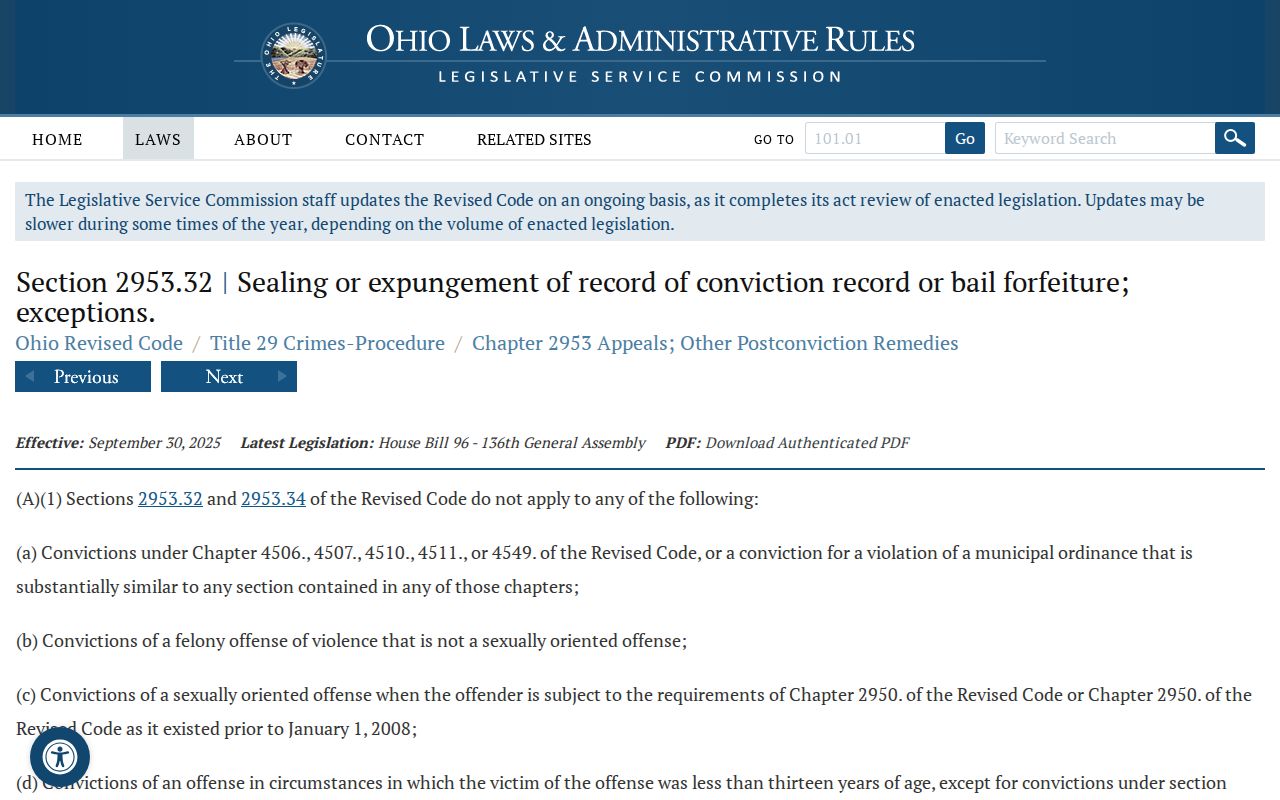
Ohio Revised Code 2953.32 establishes the sealing and expungement process for qualifying adult records.
Ohio Revised Code 2151.356 addresses juvenile sealing and helps explain why juvenile access is different.
A CJIS search can come back empty for many reasons. The court could be wrong. The spelling might be off, the case number bad, or the period outside coverage. A separate Probate path, a portal glitch, or a restriction can also block the result. An empty screen is never proof a case did not exist. On sealing, note that the Clerk FAQ says no expungement forms are provided. Take that question to the sentencing court and current law.
Stark County Criminal Copy Paths
Found the right Stark County criminal case online but cannot get the document? Go to the Criminal Division counter. Mail a focused request, or call to confirm case status. The Clerk's published copy route asks for party names. It also wants the filing year, a $5 check or money order, and a self-addressed stamped envelope. Plain copies cost $0.10 per page. Certified copies run $1 per page plus a $1 certification fee. For access limits on restricted cases, the official sealing and expungement statute governs.
A restricted record answers to law and court action, never to an ordinary search result. Appeals take you elsewhere. Contact the Clerk's appellate desk. Or try the Fifth District rather than trusting the trial docket alone. Administrative records may fit the public-record route. Court-case access still follows Ohio's more specific court-access rules and any sealing order in force.